
Faith Series
The Walk Of Faith.
The text
Hebrews 11:1–3
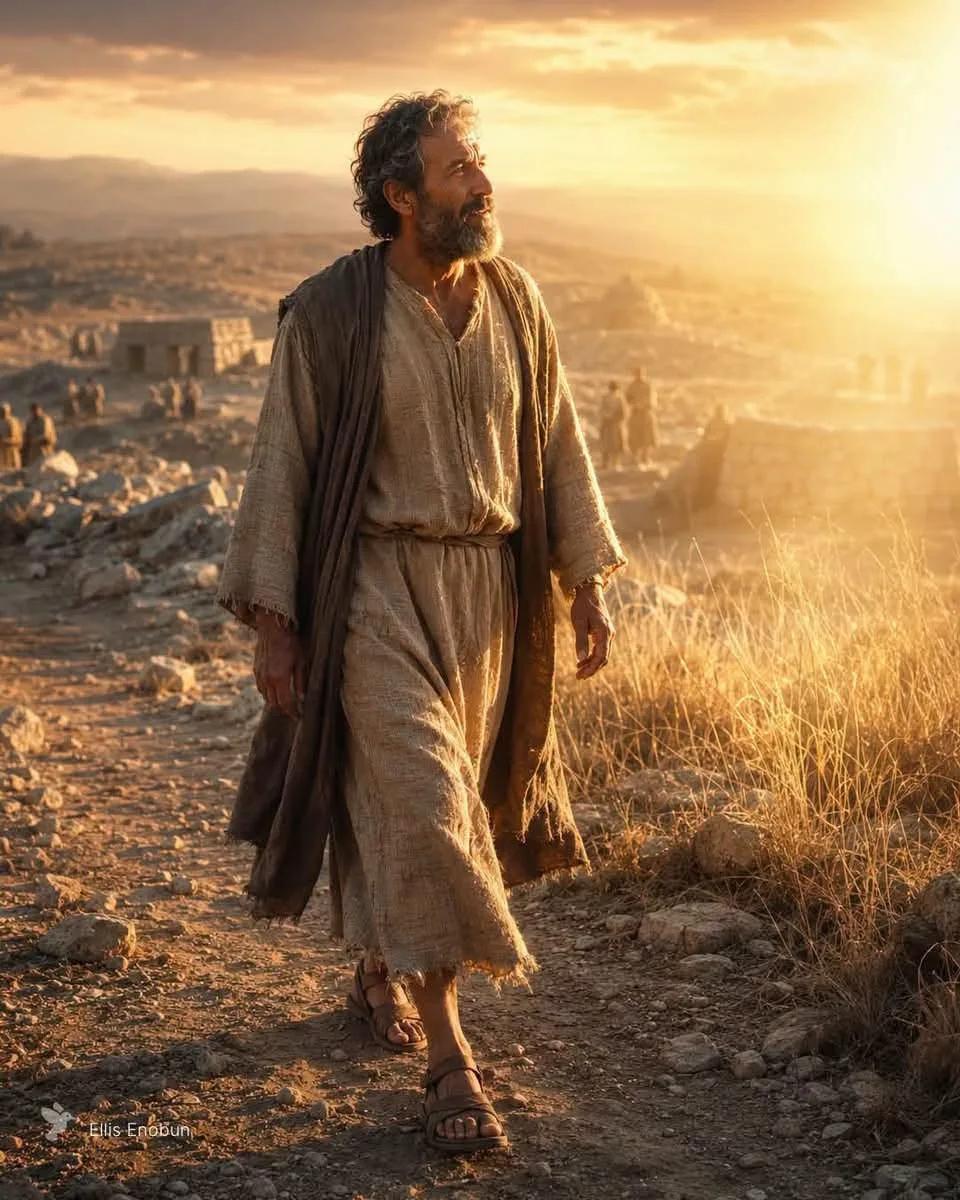
Faith is described as substance and evidence, not as a feeling. A study of what faith is made of when the answer is slow and the room is quiet.
Outline and study notes
TEXT: 2 CORINTHIANS 5:7; HEBREWS 11:1–6 (KJV)
INTRODUCTION
The Christian life is fundamentally a life of faith. From the moment a man believes the Gospel and receives salvation, he is introduced to a life that operates beyond the limitations of natural sight. This is because our relationship with God is established and sustained by faith.
However, faith is often misunderstood as merely believing God for something or expecting Him to fulfil certain desires. While faith certainly involves trusting God for His promises, it goes much deeper than receiving things from Him. Faith is a way of life. It is the posture of the heart that responds to God's Word, trusts His character, and remains committed to His instructions, even when circumstances appear contrary to what He has spoken.
Apostle Paul makes a profound statement in 2 Corinthians 5:7: "For we walk by faith, not by sight." This statement reveals that the believer's walk is not governed by what is immediately visible, but by the reality of God's Word. In other words, our circumstances do not have the final authority over our convictions; God's Word does.
UNDERSTANDING THE WALK OF FAITH
To understand the walk of faith, we must first understand what faith means. Hebrews 11:1 gives us this definition: "Now faith is the substance of things hoped for, the evidence of things not seen."
Faith gives substance to our hope and conviction to our expectations, even when there is no physical evidence to support them. It is the assurance that what God has spoken is reliable because the One who spoke it is faithful.
Notice that Scripture does not describe faith as an attempt to deny reality. Rather, faith recognises that there is a reality beyond what our physical senses can perceive. It does not pretend that challenges do not exist; it simply refuses to give those challenges greater authority than God's Word.
Therefore, walking by faith does not mean living carelessly, ignoring facts, or refusing to acknowledge difficulties. It means interpreting our experiences in the light of God's revealed truth and allowing His Word to determine our response.
FAITH IS A RESPONSE TO GOD'S WORD
One of the fundamental principles of the walk of faith is that faith has its foundation in God and His Word. Romans 10:17 declares, "So then faith cometh by hearing, and hearing by the word of God."
Faith is not manufactured by human imagination, positive confession, or emotional excitement. Biblical faith is birthed and strengthened through the hearing and reception of God's Word.
Consider Abraham. When God called him out of his country and away from his kindred, Abraham responded to God's instruction without knowing all the details of his destination. Hebrews 11:8 says, "By faith Abraham, when he was called to go out into a place which he should after receive for an inheritance, obeyed; and he went out, not knowing whither he went."
Abraham's obedience demonstrates an important dimension of faith: faith does not always require us to understand every detail before we obey God. It requires us to trust the One who is leading us.
The walk of faith is not about having answers to every question. It is about having confidence in the God who holds the answers.
FAITH AND THE REALITY OF THE UNSEEN
The believer must understand that the physical world is not the entirety of reality. There are spiritual realities that cannot be discovered or measured by the natural senses.
This is why the walk of faith demands that we develop our convictions from God's revelation rather than from appearances alone.
In 2 Kings 6:15-17, the servant of Elisha became afraid when he saw the Syrian army surrounding the city. His fear was based on what he could physically see. However, Elisha understood that their physical situation did not represent the entirety of their reality. He prayed that God would open the eyes of his servant, and the young man's eyes were opened to see the mountain full of horses and chariots of fire.
This account reveals to us that there are realities beyond our immediate physical environment. Nevertheless, we must be careful not to confuse faith with speculation or imagination. Our confidence in the unseen must be anchored in what God has revealed.
Faith does not create God's reality; it responds to it.
THE WALK OF FAITH REQUIRES OBEDIENCE
A genuine walk of faith cannot be separated from obedience. It is possible to claim that we believe God while continually resisting His instructions. However, biblical faith produces a corresponding response.
James 2:17 says, "Even so faith, if it hath not works, is dead, being alone."
James was not teaching that human works purchase salvation. Rather, he showed that genuine faith is not merely intellectual agreement with the truth; it produces corresponding actions.
When Noah received God's instruction about the coming flood, he responded by building an ark, even though the circumstances around him did not yet suggest what God had revealed. Hebrews 11:7 records that Noah acted by faith.
His obedience was evidence of his conviction.
In the same way, our faith must find expression in how we live, the decisions we make, the instructions we obey, and the confidence we maintain in God's Word.
WHEN NOTHING SEEMS TO BE MOVING
One of the most challenging dimensions of the walk of faith is learning to remain steadfast when there is no visible progress.
There are moments when a believer has received God's Word, obeyed His instructions, and remained committed to His promises, yet the circumstances around him appear unchanged.
It is in such moments that the strength of our convictions is tested.
Hebrews 10:35–36 says, "Cast not away therefore your confidence, which hath great recompence of reward. For ye have need of patience, that, after ye have done the will of God, ye might receive the promise."
Notice that Scripture connects confidence with patience. This means that faith is not only demonstrated in the moment we receive a word; it is also demonstrated in our willingness to remain committed while waiting for its fulfilment.
However, patience should not be confused with inactivity or the refusal to make necessary decisions. Faith continues to obey, work, grow, and remain faithful while trusting God's timing and wisdom.
The absence of visible movement does not necessarily mean the absence of God's involvement.
FAITH IS A CONTINUOUS WALK
Faith is not an occasional spiritual activity reserved for moments of crisis. It is the believer's daily posture towards God.
Colossians 2:6-7 says, "As ye have therefore received Christ Jesus the Lord, so walk ye in him: Rooted and built up in him, and stablished in the faith, as ye have been taught, abounding therein with thanksgiving."
We received Christ by faith, and we are expected to continue our walk in Him by faith.
This means that faith must influence every dimension of our Christian experience: our relationship with God, our understanding of His Word, our decisions, our relationships with others, and our response to life's challenges.
A believer who only exercises faith when he needs a miracle has not fully understood the walk of faith. Faith is not merely a tool for obtaining supernatural interventions; it is the foundation of our daily fellowship and relationship with God.
The walk of faith is a journey of continuous trust, obedience, and dependence on God. It is a life that refuses to be governed exclusively by what the eyes can see or what circumstances suggest, but remains anchored in the integrity of God's Word.
We must understand that faith does not exempt us from life's challenges, nor does it guarantee that everything will happen according to our preferred timetable. Rather, it gives us the conviction to remain established in God regardless of the circumstances surrounding us.
As believers, we must learn to trust God beyond what we can explain, obey Him beyond what we can fully understand, and remain steadfast even when we cannot immediately see the outcome.
The question, therefore, is not simply whether we believe God for something, but whether our daily lives demonstrate that we trust Him.
The walk of faith is not merely about believing God for what He can do; it is about trusting Him for who He is.
REFLECTION
Are you allowing what you see around you to determine what you believe, or are you allowing what God has spoken to shape how you respond to what you see?
Remember, "For we walk by faith, not by sight." — 2 Corinthians 5:7 (KJV).